

If you’re just starting online and trying to choose between ConvertKit and Mailchimp, this comparison will help you decide which email marketing platform is better for beginners in 2026.
Both tools are popular, but they serve slightly different purposes. In this article, I’ll break down features, pricing, ease of use, and which option makes the most sense depending on your goals. If you’re comparing multiple email platforms, you may also want to read my detailed comparison of ActiveCampaign vs MailerLite.
Table of Contents
ConvertKit Overview
ConvertKit is an email marketing platform designed specifically for creators, bloggers, and online business owners who want a simple yet powerful way to build and manage their email lists.
Unlike traditional email marketing tools that focus heavily on templates and newsletters, ConvertKit is built around automation, tagging, and audience segmentation. This makes it easier to send the right message to the right subscriber at the right time.
ConvertKit allows users to:
- Create email sequences and broadcasts
- Build landing pages and opt-in forms
- Tag and segment subscribers based on behavior
- Automate emails without complex workflows
The platform is known for its clean, user-friendly interface, making it a strong choice for beginners who want professional-level email marketing without feeling overwhelmed.
ConvertKit is especially popular among:
- Content creators
- Bloggers
- Coaches and educators
- Digital entrepreneurs
You can explore CovertKit’s full automation features and current pricing directly on their official website.
Mailchimp Overview
Mailchimp is one of the most well-known email marketing platforms and has been around for many years. It’s often one of the first tools beginners hear about when starting an online business or email list.
Mailchimp offers email campaigns, basic automations, audience management, landing pages, and reporting tools. It’s designed to be beginner-friendly at first, with a visual interface and pre-built templates, but it becomes more limited as businesses grow and need advanced automation.
While Mailchimp can work well for small lists and simple newsletters, many users eventually outgrow it due to pricing increases and automation restrictions.
You can explore Mailchimp’s full automation features and current pricing directly on their official website.
ConvertKit vs Mailchimp 2026 Key Features
When comparing ConvertKit vs Mailchimp, the biggest differences come down to automation, ease of use, and long-term growth.
ConvertKit focuses on creators and uses a tag-based system that makes it easy to segment subscribers and automate emails based on user behavior. Automations are simple to build and easy to understand, even for beginners.
Mailchimp, on the other hand, relies more on lists and traditional campaigns. While it offers automation features, they can feel more limited or confusing unless you upgrade to higher-priced plans.
For beginners who want simplicity and scalability, ConvertKit tends to offer a smoother experience, while Mailchimp works better for basic email campaigns and newsletters.
ConvertKit vs Mailchimp: Pricing
Pricing is one of the biggest deciding factors for beginners choosing between ConvertKit and Mailchimp.
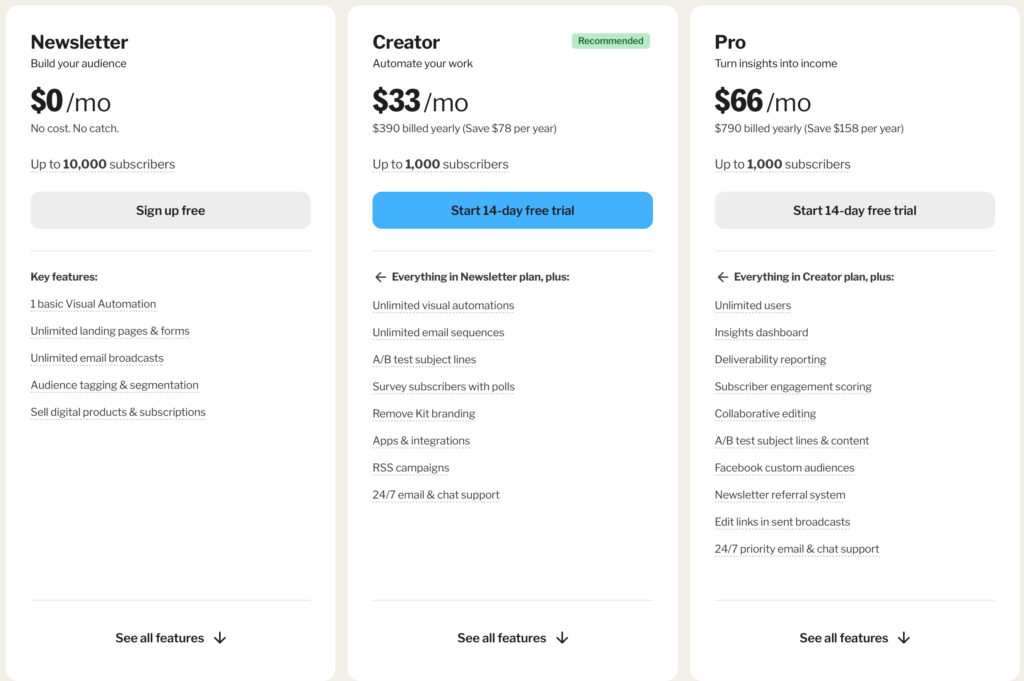
ConvertKit offers a free plan for up to a limited number of subscribers, with paid plans based on list size. As your audience grows, pricing increases, but you gain access to more advanced automation and creator-focused tools.
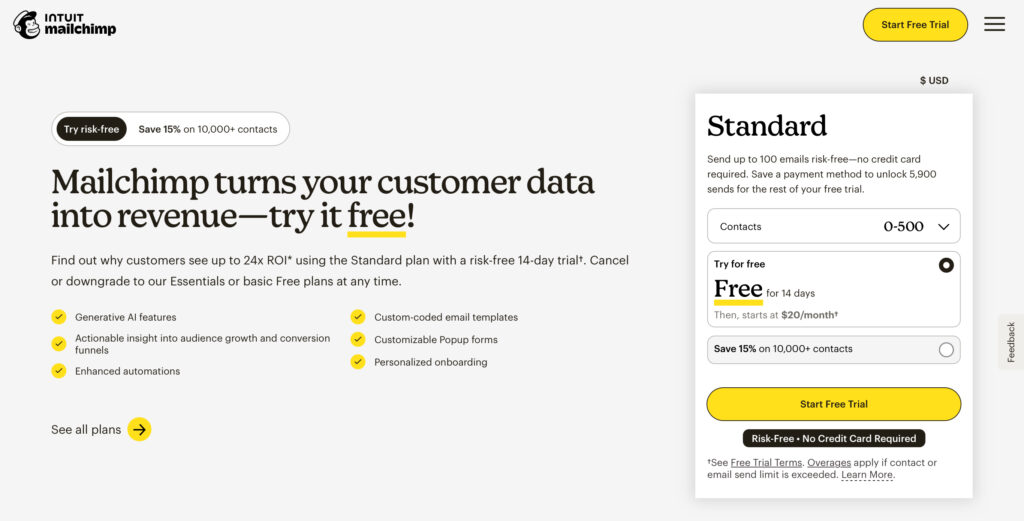
Mailchimp also offers a free plan, which is attractive to beginners. However, its pricing can increase quickly as your list grows, and many automation features are locked behind higher-tier plans.
For beginners, both platforms offer a way to start for free, but long-term costs should be considered when choosing which platform to commit to. Choosing the right pricing structure depends on your automation needs, which I explain more in my email marketing comparison guide.
Ease of Use For Beginners
Ease of Use: ConvertKit vs Mailchimp 2026
Ease of use is especially important for beginners who are new to email marketing and online business tools.
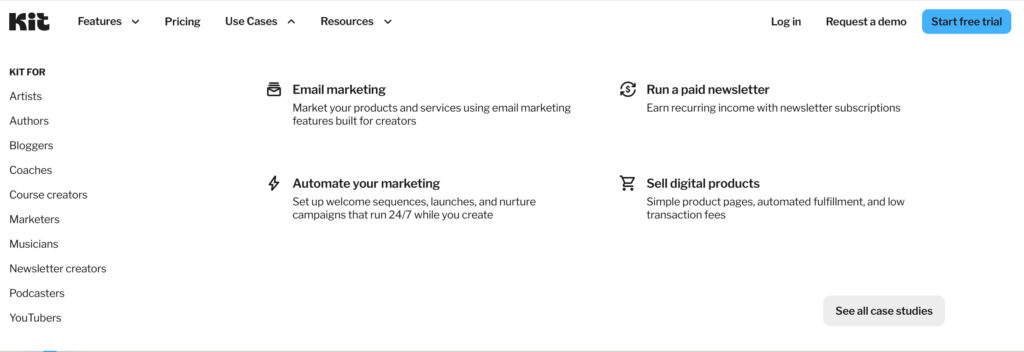
ConvertKit is designed with simplicity in mind. Its interface is clean, uncluttered, and focused on core features like email sequences and automations. Most beginners find it easy to understand how subscribers move through funnels without needing technical experience.
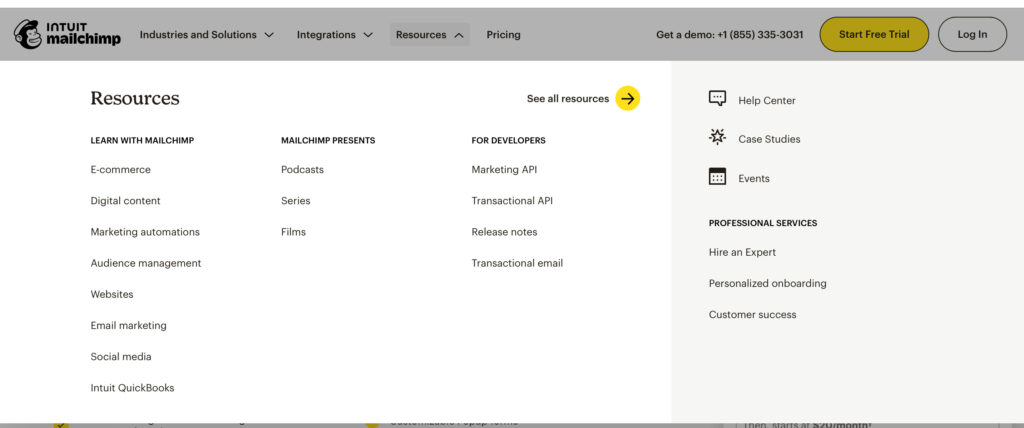
Mailchimp offers a visually rich interface with many templates and options. While this can be helpful at first, it can also feel overwhelming as more features are introduced. Some beginners find that simple tasks take longer due to menu complexity.
Overall, ConvertKit tends to be easier for beginners who want straightforward email marketing, while Mailchimp may require more time to learn as needs grow.
ConvertKit vs Mailchimp: Pros and Cons
ConvertKit Pros
- Designed for creators and online businesses
- Simple, easy-to-use automation tools
- Clean interface with minimal learning curve
- Strong tagging and subscriber segmentation
ConvertKit Cons
- Fewer email templates
- Limited design customization
- Pricing increases as your list grows
Mailchimp Pros
- Free plan available for beginners
- Large selection of email templates
- Well-known and widely used platform
- Good for simple newsletters and small businesses
Mailchimp Cons
- Automations can feel limited on lower plans
- Pricing increases quickly as your list grows
- Interface can feel overwhelming over time
Final Verdict: Which Is Better for Beginners?
For beginners just starting an online business, both ConvertKit and Mailchimp offer solid options.
ConvertKit is ideal if you want a clean, straightforward platform with strong automation, subscriber tagging, and creator-focused tools. It’s easy to scale as your email list grows, making it perfect for creators, bloggers, and small business owners who want simplicity and long-term growth.
Mailchimp works well for those who want to start with simple newsletters, pre-built templates, and a free plan for small audiences. However, automation features can be limited unless you upgrade, and the interface may feel overwhelming as your needs expand.
Bottom line: If your goal is long-term growth and automation simplicity, ConvertKit is the better choice for beginners. If you just want to experiment with email marketing on a small scale for free, Mailchimp is a decent starting point.
Wrap-Up
Choosing the right email marketing platform is a key step for your online business. With ConvertKit and Mailchimp, you can start building your email list, connecting with your audience, and growing your business in 2026. Remember to consider your goals, your audience size, and how you plan to use automation to help you decide which tool fits your needs best.
Frequently Asked Questions
Is ConvertKit better than Mailchimpfor beginners?
Both are beginner-friendly. ConvertKit is simpler for creators, while MailChimp has a free plan and easy drag-and-drop tools.
Which is more affordable, ConvertKit or Mailchimp?
MailChimp has a free plan for up to 500 subscribers; ConvertKit has a free plan for up to 300 subscribers. Paid plans increase based on subscribers and features.
Can I switch from Mailchimp to ConvertKit easily?
Yes, both platforms allow contact exports/imports. ConvertKit provides guides for migrating from MailChimp.
Get Started With the Right Platform
Get started with the right platform for your needs.
If you’re ready to build and grow your email list, both ConvertKit and Mailchimp offer powerful tools to help you create campaigns, automate emails, and manage your audience effectively.
If you prefer simplicity and creator-focused tools, try ConvertKit. If you want a more traditional, all-in-one marketing platform with a free entry point, Mailchimp may be the better fit.
Explore both platforms above and choose the one that aligns with your goals. Then take action and start building your email list today.
If you’re ready to build your email list, both platforms offer beginner-friendly options depending on your goals.
For now, you can explore their official websites above to review current pricing and features.
👉 Try ConvertKit here
👉 Try Mailchimp here